
Dina Al-Mahdy, Tuesday 23 Jan 2024
Dina Al-Mahdy sets out to sample some of Alexandria’s most famous dishes that have long attracted locals and visitors alike.

Alexandria, the vibrant city located by the Mediterranean Sea, has been a cultural crossroads for centuries, bringing together diverse cultures and civilisations. From the time of the ancient Egyptian ruler Cleopatra to the present day, the city has undergone many culinary transformations, offering a unique and delightful gastronomic experience to locals and visitors alike.
Known for its rich cultural heritage and diverse culinary scene, the city has been a melting pot of various cultures, including Greek, Italian, and Egyptian, which have greatly influenced its food traditions. This article will take a closer look at some of Alexandria’s iconic eateries and the stories behind them. From traditional bakeries to coffee shops and restaurants, these establishments have played a significant role in shaping Alexandria’s culinary landscape.
Founded by Alexander the Great in 331 BCE, Alexandria quickly became a centre of trade and commerce, attracting people from all corners of the world. Its strategic location at the intersection of Europe, Asia, and Africa turned it into a melting pot of cultures, religions, and traditions. Throughout history, the city has been ruled by various empires, including the Greeks, Romans, Byzantines, Ottomans, and British, all of whom left their mark on the city’s architecture, literature, and cuisine.
Food has always played a significant role in Alexandria, symbolising abundance and prosperity. Legend has it that when Alexander the Great was planning the city, birds pecked at the streets he had laid with grain, which was considered a good omen by the priests, signifying the city’s eternal abundance.
This notion of opulence and exoticism carried on throughout the reign of the later queen Cleopatra, who was renowned for her lavish banquets. Writers depicted her feasts as a way of captivating the two mighty Roman generals of her time, first Julius Caesar and then Mark Antony. Alexandria’s cuisine flourished during this era, as Egypt was the wealthiest country in the Mediterranean Basin, and Cleopatra herself was erudite, sophisticated, and sensual.
The queen’s table epitomised the luxury enjoyed by Alexandrians, showcasing a variety of dishes from around the world, accompanied by the finest wines.
However, Alexandria experienced a decline in wealth and prosperity until the early 19th century when Mohamed Ali became the ruler of Egypt. Recognising the strategic importance of the city, he revitalised it by attracting foreigners and restoring its status as a thriving cosmopolitan hub.
The influx of diverse communities brought new culinary influences and contributed to the cultural mosaic of the city. Restaurants and patisseries serving Greek, Italian, French, and Turkish cuisines emerged, offering a wide range of delicacies such as baklava, loukoumades, and ice cream. Food became a shared experience, transcending racial, religious, and class boundaries.
The Ottoman Empire also exerted a significant influence on Egyptian cuisine, especially in Alexandria. With its diverse territories spanning Asia, Europe, and North Africa, the Empire assimilated foods and culinary practices from different cultures. Turkish, Greek, Lebanese, and Armenian cuisines all contributed to the rich culinary heritage of Alexandria. Dishes like goulash and baklava, with their origins in Central Asia, became beloved delicacies enjoyed by Alexandrians, regardless of their cultural backgrounds.
In addition to the Ottoman influence, French cuisine also played a pivotal role in Alexandria’s culinary scene. Despite France’s short occupation during the expedition led by French general and later Emperor Napoleon Bonaparte to Egypt at the end of the 18th century, the French left an indelible mark on Egyptian culture, including its food.
French became the language of refinement and sophistication, and French missionaries opened schools throughout Egypt. Even though the French community remained separate from the local population, French cuisine became prevalent in Westernised homes and restaurants, with French names for dishes entering the everyday language.
Other foreign communities, such as the Levantines, Armenians, Greeks, and Turks, also contributed to the culinary evolution of Alexandria, with shared dishes and ingredients. The city’s magnanimous nature of accepting and embracing different cultures is evident in its culinary habits.
While the foreign communities in Alexandria have dwindled in recent years, their culinary heritage lives on through the recipes handed down by previous generations. Legendary patisseries and tea houses like Baudrot, Tamvaco, Fino, and Hamos continue to symbolise the city’s rich culinary traditions.
COMMUNITIES: Alexandria has attracted diverse foreign communities who have made it their home over the past 200 years.
Among these communities, the Levantines, Armenians, Greeks, and Turks have influenced the local culinary scene, shaping what is now known as Alexandrian food. While geographically neighbouring North African countries like Libya and Morocco share significant cultural aspects with Alexandria, there has been limited culinary interaction between them. However, the Middle Ages and the 18th century did see an influx of Moroccan merchants who settled in Alexandria, enriching the local culture with their trade in various goods.
However, with the decline of trade and a diminished Moroccan presence, their cultural specificity gradually faded. Despite differences in their cuisines, both Egyptian and Maghrebian cultures utilise terracotta pots called tagen, or tagine, for baking and enjoying couscous, albeit in different culinary contexts.
The Greek community, the largest foreign community in Alexandria since the time of Mohamed Ali, played a significant role in shaping the city’s culinary landscape. Greek immigrants, primarily from poor Greek islands, sought livelihoods in prosperous Alexandria, often achieving notable success in various professions and businesses. Greek and Egyptian culinary interactions resulted in both shared dishes and disputes over certain foods, such as moussaka.
Similar to the Copts and Egyptians, the Greeks often observe fasting periods and have dishes resembling Egyptian koshary, featuring rice and black lentils. Greek cooking also features a dish similar to bisara, prepared with lentils and onions. Although Egyptian and Greek cuisines differ, both cultures share a fondness for beans. While Egyptians favour fava beans (fuul), the Greeks regularly consume white beans (fassolya beida). Additionally, Greek cuisine boasts a falafel-like patty made with chickpeas, a variant of the shami falafel, popular in Egypt, Lebanon, and the Ottoman Empire.
Many dishes have become indistinguishable, reflecting the culinary fusion of Egyptian, Lebanese, Greek, and Ottoman influences.
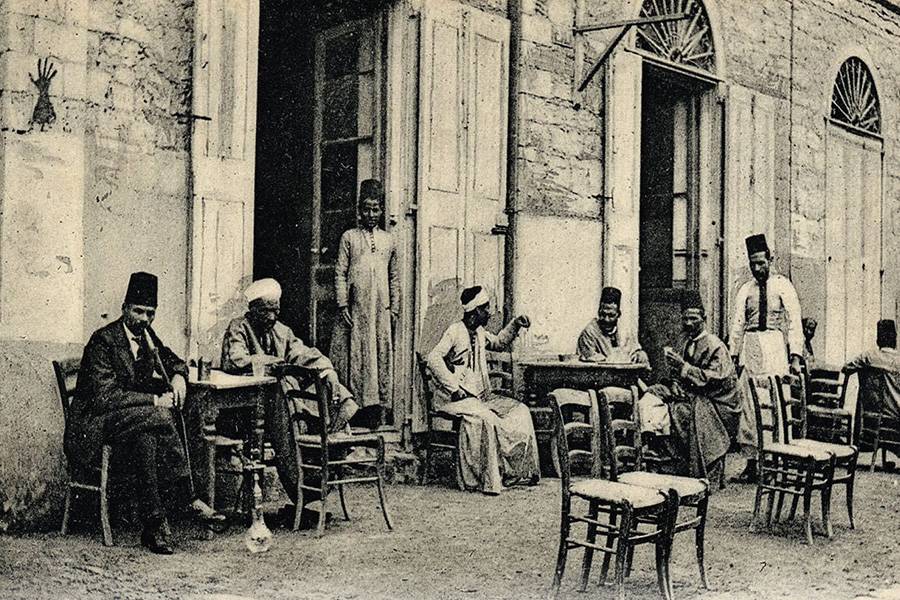
Greek salad resembles Egyptian salad, for example, with the addition of feta cheese in Greek cuisine. Egyptians typically prefer a vinaigrette dressing, occasionally using lime instead of vinegar when in season. The traditional breads of the region, such as Egyptian eish baladi and the Syrian and Lebanese thin bread, often referred to as pita bread in Europe and the US, trace their origins to the Greek bread or pie.
Sheep intestines, a delicacy favoured by Egyptians and the Shawam, are also enjoyed by Greeks. Varieties such as coccorrezzi and spleenandero are richly seasoned and charcoal-grilled and an example of shared gastronomic preferences.
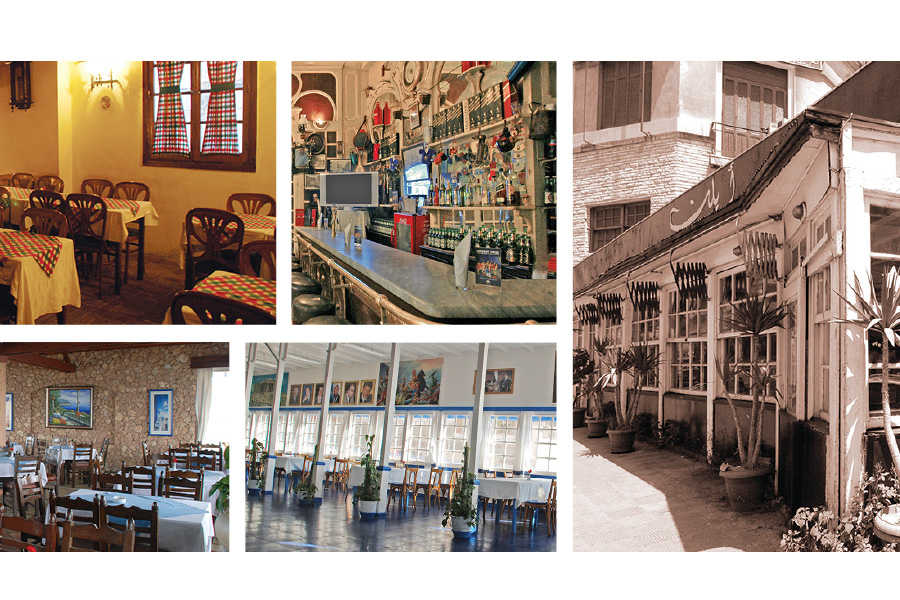
ICONIC EATERIES: Eating out in Alexandria at the beginning of the 20th century was an experience filled with pleasure and variety.
The city was home to a diverse range of bakeries and patisseries, reflecting the diverse clientele that frequented them. From providing brioches to kaak and finikia kourabiedes, a kind of Greek biscuit, these establishments catered to the different tastes and occasions of the city’s people.
Interestingly, many of these iconic eateries, despite their differences, had humble beginnings. Some were started by peasants who arrived in the city with their few possessions, while others were started by apprentices who had traveled from distant lands with just a trunk. Regardless of their backgrounds, these enterprising individuals found success in Alexandria, capturing the hearts and taste buds of their Alexandrian patrons.
One notable aspect of dining in Alexandria was the personal touch that the eatery owners brought to their establishments. For example, Mr Pastroudis, owner of the restaurant of the same name and always dressed in his signature white sharkskin suit and tie, personally welcomed his guests by name. Meanwhile, Mrs Pitsa at the patisserie Délices knew the birthdays and addresses of all the children who came in and prepared special dishes for each of them.
Dining out in Alexandria was not just about the food; it was a familial experience that created lasting memories.
The success of the food and dining scene in Alexandria can be attributed to various factors, including psychology, national character, and cultural heritage. Alexandrians seemed to have a natural talent for creating inviting and successful eateries, but it was not just a matter of intuition. This deep understanding of the city’s persona and social heritage, rooted in its way of life, contributed to the overall experience shared by the people of Alexandria.
Egyptian hospitality also played a significant role in the flourishing food business. Just as receiving guests in homes was seen as a pleasure, the act of serving customers in restaurants was also viewed as an opportunity for hospitality and generosity. Whether rich or poor, providing food to others was a point of pride for Alexandrians, whether breaking bread with friends and family at home or feeding customers in restaurants.
The earliest eateries in Alexandria can still be found today, many of them having been established around 1900. Most of these establishments were located in the European Town, also known as the city centre, which was primarily inhabited by foreigners. However, the Ottoman Town, later known as the Arab or Turkish quarter, developed its own unique eateries as the 19th century progressed. Cafés, patisseries, restaurants, and bars with a Western influence thrived in the downtown area, catering to both the foreign population and Westernised Egyptians.
While it is often believed that the Greeks in Alexandria were primarily grocers or that all the grocers in Alexandria were Greeks, statistics show that such claims are mostly legends rather than truths. In 1915, there were only 36 Greek grocers compared to 116 Greek merchants in the city. The Greek community, known for its entrepreneurial spirit, was the largest foreign community in Alexandria and owned many of the city’s eateries. While there were a few Italian, French, and Swiss establishments, the vast majority were Greek-owned.
Today, Alexandria is home to several iconic restaurants that have been serving traditional Alexandrian cuisine for decades. These restaurants have become institutions in their own right, with a rich history and a loyal customer base. They have managed to maintain their culinary legacy and continue to provide an exceptional dining experience.
Traditional Egyptian eateries, mainly serving liver, fish, or grilled meat and chicken, were also scattered around the Attarine, Rue de Bourse, and Bahari districts. Surprisingly, some of these eateries have been around since the 1920s, dispelling the misconception that they are recent trends. They include Abu Gharib, founded in 1936 when Haj Ziyada embarked on a business venture dealing in liver with his father and brothers Tewfik, Younis, and Gharib.
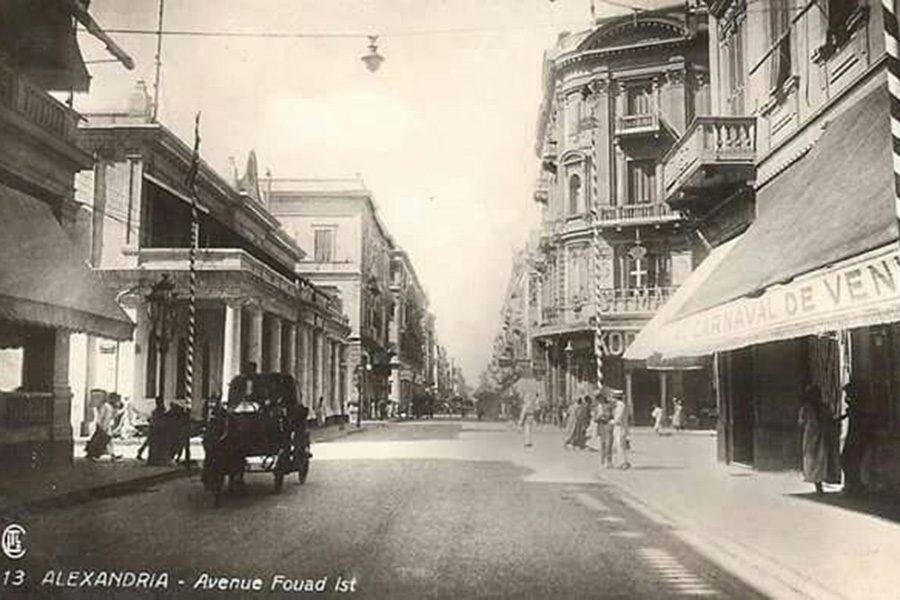
Starting with a humble cart on the Rue Bourse in Alexandria, their business grew rapidly, eventually leading them to open a small shop in Attarine called Abu Gharib, which soon gained popularity for their delicious liver sandwiches. Abu Gharib’s liver sandwiches became a staple in Alexandria, attracting locals and tourists alike.
If kebda Iskandarani (Alexandria liver) represents the essence of Alexandria’s culinary specialties, fish also undoubtedly claims a prominent place among them. While households can purchase fresh fish from various markets in Alexandria, such as the Souq Zananiri in Cleopatra, the Souq Shedia in Ibrahimieh, and the Souq Bacos in Bacos, enjoying a fish meal at an open-air restaurant along the coastline holds unbeatable charm. These establishments offer an exquisite selection of fish, crabs, shrimps, squid, lobsters, and clams displayed on crushed ice, allowing patrons to choose their preferred catch.
One fish restaurant that has an iconic place in the city is Zephyrion, established in the 1920s in Abu Kir. Its Greek owner acquired the land from Prince Omar Toussoun, a descendant of Egypt’s ruler Mohamed Ali and a prominent figure in Alexandria. With late President Anwar Al-Sadat even sometimes paying visits to various eateries in Alexandria, Zephyrion’s reputation gained recognition from notable personalities.
Another restaurant is Qadura, founded in Bahari in 1950 by fisherman Haj Abdel-Qader Mohamed and evolving from a simple delivery spot to a fully-fledged dining establishment with 80 tables. It is known for its beautiful setting near the sea, where patrons could witness boats and fishermen returning with their fresh catch. Qadura owes its longstanding success to its commitment to preserving tradition. Since its inception, the restaurant’s menu has remained unchanged.
ICE CREAM: Ice cream, known as gellati, galata, glaces, clo clo, and cassata, has earned a special place in Alexandria’s culinary culture.
It brings back memories of refreshing summer strolls and has been the source of inspiration for songs since the 1940s when Mohamed Abdel-Wahab played a dentist opposite the pretty Raqya Ibrahim suffering from a toothache to the more recent film Ice Cream in Glym.
As the ice cream industry developed, Groppi’s found its niche as one of the first to package and sell its products. Small-sized containers sold in fridges placed by the entrance of better-known grocers such as Menassa, Eino, and Simonds, as well as other patisseries, leave a typical olfactory memory of their mango and strawberry flavours in particular. Along the Alexandria Corniche, cassata, too, was a favourite with many, offering more than one flavour and coming in a single flat-shaped slab, making it easy and less messy to eat.
One iconic Alexandria story concerns Granita Al-Mahdy, a 13-year-old orphan from Upper Egypt who embarked on a journey to find work and provide for his family. Starting as an employee for a Greek ice cream seller in Alexandria, Al-Mahdy’s ambition led him to search for the perfect location to establish his own kiosk. He settled in Glym and built a wooden kiosk equipped with a fridge in 1926.
Initially purchasing ice cream from his former employer, his desire to create his own flavours soon prompted him to experiment with lemon juice, sugar, and gelatin, excluding milk. He named his creation Dandorma, which became a hit among customers. Mr Glymonopoulos, a Greek supermarket owner of Italian heritage, informed Al-Mahdy that the Italians in the city referred to it as granita.
One day, king Farouk himself discovered the crowd gathered around Al-Mahdy’s kiosk and decided to try his granita. Impressed, he paid LE5, which the family still possesses, and the applause from the people revealed his identity. As a result, Al-Mahdy gained the favour of influential figures at the time. The wife of Mustafa Fahmi Pasha successfully obtained permission for him to open a shop in Mustafa Fahmi Pasha’s garage. Eventually, he acquired the current shop in 1948, moving closer to the Corniche.
At the other end of town in Bahari, the ice cream parlour Azza opened in the 1960s, while Nezami and Makram have been there since the 1940s. Azza started as a cart and is famous for using natural ingredients such as mastic from Greece and sahlab from Syria.
STREET VENDORS: Alexandria is renowned for its lively street culture and diverse culinary offerings, and street vendors play a pivotal role in shaping the city’s character, tempting both locals and visitors with their wide range of mouthwatering delights.
Whether it’s the savory roasted corn cobs found along the Corniche, or the comforting aroma of hot sweet potatoes cooked on mobile carts, these vendors add a unique charm to Alexandria’s bustling streets.
Roasted corn vendors are a common sight along the Corniche and at tram stations. Using small stationary ovens fueled by glowing coal and feathers for fanning, these vendors expertly cook corn cobs to perfection. Loved by both young and old alike, these roasted corn cobs make for a favourite snack, particularly during strolls by the waterfront.
If you’re craving something sweet and comforting, the enticing scent of hot sweet potatoes cooked in mobile carts also permeates the air. Roaming the crowded streets of Alexandria, these vendors offer this delightful winter treat, warming the hearts and palates of passersby on chilly evenings. The vibrant red skin and orange flesh of the sweet potato create a visually pleasing and mood-lifting snack.
In the past, carts equipped with manual presses were used to extract sugarcane juice. The refreshing, frothy pale green drink was served in tall glasses, pure and unadulterated. Some vendors even sold unsqueezed sugarcane, allowing people to break it on their knees and peel it with their teeth. Children were particularly fond of these small cane pieces, often referred to as “knuckles”. Although the traditional carts have now disappeared, many shops now offer electrically squeezed sugarcane juice, ensuring that this beloved beverage continues to quench the thirst of locals and tourists alike.
In addition to the mobile carts teeming with fruit and vegetables, Alexandria is also home to wandering vendors who offer food, drinks, and distractions. While some of these vendors have faded away over time, others have stood the test of time. As they roam the streets, these vendors attract attention with their unique cries. Depending on their offerings, they either park their carts at street corners or traverse the city with their merchandise. Their presence adds vibrancy and a touch of nostalgia to the Alexandria experience, without which the lively atmosphere of the city would be incomplete.
Locals in popular areas maintain a strong demand for traditional juices such as sugarcane, sobia, tamarind, licorice, and carob. Licorice vendors, dressed in typical Alexandrian attire with baggy sailors’ trousers, a wide sash, and a black or red waistcoat, carry containers with long spouts and glasses on their backs. Clashing aluminum plates or cymbals announce their presence.
The skill with which they pour the juice, without spillage or frothing, into glasses held high above, leaves spectators in awe. This icy drink serves as a delightful treat on hot days and is also renowned for its digestive qualities. Alternatively, the juice can be found in small shops or stalls, with Samy in Ibrahimiya being the most famous.
Semeet vendors offer a simple, affordable, and satisfying meal consisting of round loaves with a hole in the middle, accompanied by a cumin and salt mixture called dokka and a boiled egg. This traditional street food has become less common in recent years, but it remains a nostalgic treat for many.
The term fresca comes from Italian and means “fresh”. Fresca vendors carry small glass boxes and sell caramelised sesame, peanuts, or pistachios (in the past, almonds were also available) wedged between small wafers or larger wafers coated in honey.
Boys can often be found walking along beaches on the North Coast from Abu Kir in the east to Marsa Matrouh in the west carrying glass boxes on their shoulders and calling out “fresca, fresca”.
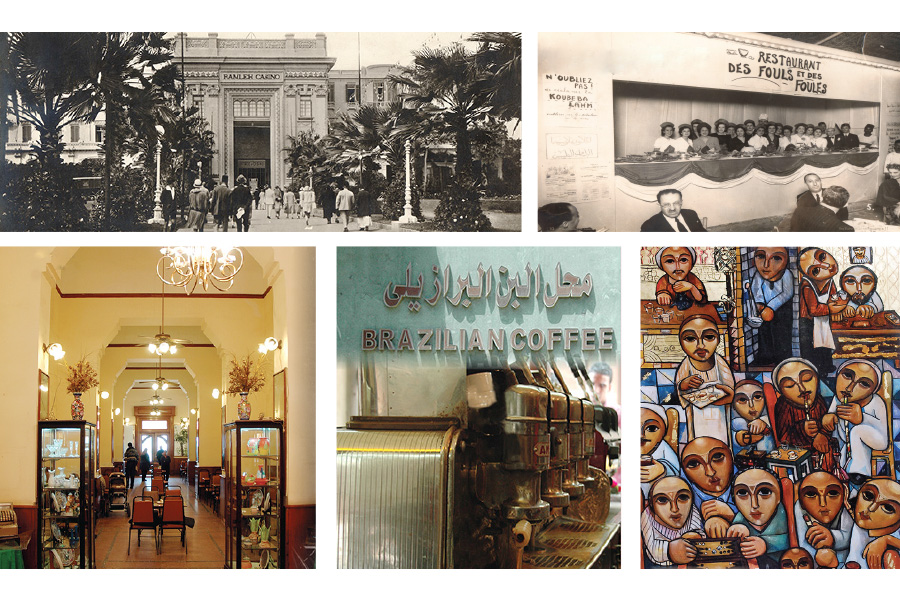
COFFEE SHOPS AND BAKERIES: In the early 1900s, Dimitri Hamos, a Greek immigrant, arrived in Alexandria with a wooden trunk. He worked at a Greek bakery and eventually bought it, calling it Hamos and relocating to a less competitive area near the Ibrahimiya tram station.
The bakery flourished as the Greek population in Ibrahimiya grew. After Dimitri’s passing, his sons took over, and later his granddaughter Lillian successfully ran the bakery.
Between Ramleh and the city centre, the Fino bakery opened in 1948, founded by Haj Mohamed Hassan. The bakery initially specialised in selling Afrangi or fino bread, which resembles French bread but with a softer crust compared to the local pitta bread. The bakery later expanded to cater to Greeks, Italians, and Egyptians in the area.
Located near to each other, the Elite and Asteria cafés, owned by Greeks, have faced a decline in recent years. Elite had a larger space with an upstairs dining room and was known for its gracious hospitality. Asteria started as a pizza shop and remains under its original ownership, serving pizzas, pasta dishes, and their renowned chocolat mou.
Sofianopoulo, the oldest coffee store in Alexandria, opened in 1908. It gained popularity among locals and specialised in coffee blends from Ethiopia, Yemen, Brazil, and Colombia. Over the years, the ownership changed, and the coffee store adapted to cater to a broader audience with lighter coffee blends and flavours like hazelnut and chocolate. They also introduced more affordable coffee options sourced from Indonesia and India, while remaining a beloved establishment in Alexandria.
Chez Gaby, located in the Cordahi Complex on Avenue Fouad, is a renowned restaurant on Alexandria’s culinary scene. It started as a cinema and cafeteria in 1935, then transformed into the Chocolaterie Royal and later Au Ritrovo. Gabriel Asaad then rented part of Au Ritrovo and established the popular pizza shop Chez Gaby. It became a sensation known for its Italian atmosphere, affordability, and friendly spirit.
Founded in 1935 by Greek entrepreneurs Andrea Drikos and George Pericles, Trianon began as a patisserie and chocolatier at Ramleh Station. It expanded and became a beloved café with a prime location and beautifully designed interior. After changing owners, Trianon underwent renovations and expanded into a five-star restaurant and coffee shop. It now has multiple branches in Alexandria, offering a wide range of culinary delights and catering services.
Pastroudis, founded in the early 20th century by Greek adventurer Pastroudis, started as a bakery and later became a restaurant, tearoom, and bar. Athanash Pastroudis and his Swiss wife Gabrielle ventured into pastry making, delighting Alexandrians with their treats. Pastroudis was known for its street terrace where people enjoyed tea, coffee, and chocolate cakes. They also owned the popular seafront restaurant and wedding hall called Monseigneur, attracting esteemed guests such as king Farouk and president Anwar Al-Sadat.
Established in 1928 by Sedaris, Brazilian Coffee is an enduring institution with two locations in Alexandria. Despite changing ownership, the stores maintain their original ambiance and interior. Its coffee beans, sourced from Brazil and occasionally Cuba, attract coffee enthusiasts, including regulars like Cyril Sursock and Robert Gasche.
Located on the Corniche, Athineos is a historic restaurant reflecting many of the cultural influences of Alexandria. It was founded in 1900 by Costantinos Athineos and became a popular spot for Alexandria’s elite. Catina, Constantinos’ wife, introduced new programmes and entertainment, cementing Athineos as a premier dining destination. Today, it is managed by Yacoub Nassar.
Délices, founded in 1900 by Cleovoulos Moustakas, is a pastry paradise known for its French elegance. It offered a wide range of pastries, chocolates, ice cream, and syrups. Led by Stelios Koumoutsos, a talented team of chefs created delectable treats. Délices attracted the cosmopolitan society of Alexandria, offering a delightful dining experience both on inside and outside seating.
GRILLS: Baash and Hosni are renowned names in Bahari for their mastery of grilling techniques and delicious mashawi dishes.
Baash, founded in 1950, has a long-standing legacy and has attracted notable patrons like King Juan Carlos I of Spain. Hosni, started by butcher Haj Hosni, opened the first Hosni branch approximately six decades ago. From its modest beginnings, the brand has experienced rapid growth, and is known for its commitment to quality and raising their own herds.
FUUL AND FALAFEL: Mohamed Ahmed’s culinary legacy began in 1918 with his shop specialising in fuul and falafel.
This shop, called Benjamin and founded in 1932, swiftly made its mark in the scene. In 1957, Benjamin’s owners sold the shop to Mohamed Ahmed’s sons, who continue to serve exceptional fuul and falafel today. Benjamin has become a pilgrimage site for food enthusiasts, attracting notable patrons such as queen Sophia of Spain and Egyptian novelist Naguib Mahfouz.
For Alexandrians, food is more than just sustenance; it is a symbol of their way of life. The city’s culinary heritage represents a source of immense pride, and many passionate individuals are dedicated to its preservation and promotion.
Taste of Alexandria, a book published by the Bibliotheca Alexandrina, stands as a testament to this commitment. It takes readers on a captivating journey through the city’s rich culinary history, offering a treasure trove of flavours and aromas. The book beautifully showcases the taste of cosmopolitan Alexandria, emphasising the role of food in creating a vibrant and diverse cultural tapestry.
By interweaving recipes, personal anecdotes, and historical facts, Taste of Alexandria paints a vivid portrait of a city where locals and foreigners, rich and poor, shared their dishes, influencing and shaping the city’s cosmopolitan character.
* A version of this article appears in print in the 25 January, 2024 edition of Al-Ahram Weekly
 Dina Al-Mahdy: Award-winning Writer and Translator